

Packing for a business trip shouldn’t take longer than the flight. But when your schedule includes a presentation, a lunch meeting and dinner, it’s easy to end up with a bag full of clothes and no clear idea of what goes together.
That was the problem for a client from the Midwest who spends a lot of time in airports. Getting dressed at home already took him about 20 minutes. Packing for a trip could take an entire evening. He wanted more outfit options without bringing more luggage.
We designed a 15-piece business travel capsule wardrobe around his itinerary and his body. The idea was simple: get the fit right, choose fabrics that travel well, and make the pieces work together.
Watch Dan introduce the Traveling Businessman Capsule
1. Start With the Trip, Not the Suitcase
Our client didn’t need 15 unrelated things. He needed clothes for the different situations on his calendar: a suit for presentations, something less formal for lunch meetings, and comfortable options for travel and downtime.
A useful travel wardrobe starts with those requirements. If a jacket only works with one pair of trousers, it earns one outfit. If it works as part of a suit and separately with another trouser, it gives you more reasons to pack it.
The goal isn’t to bring every piece on every trip. It’s to build a small wardrobe you can pack from confidently, based on the weather and the meetings ahead.

2. Get the Fit Right Before You Build the Wardrobe
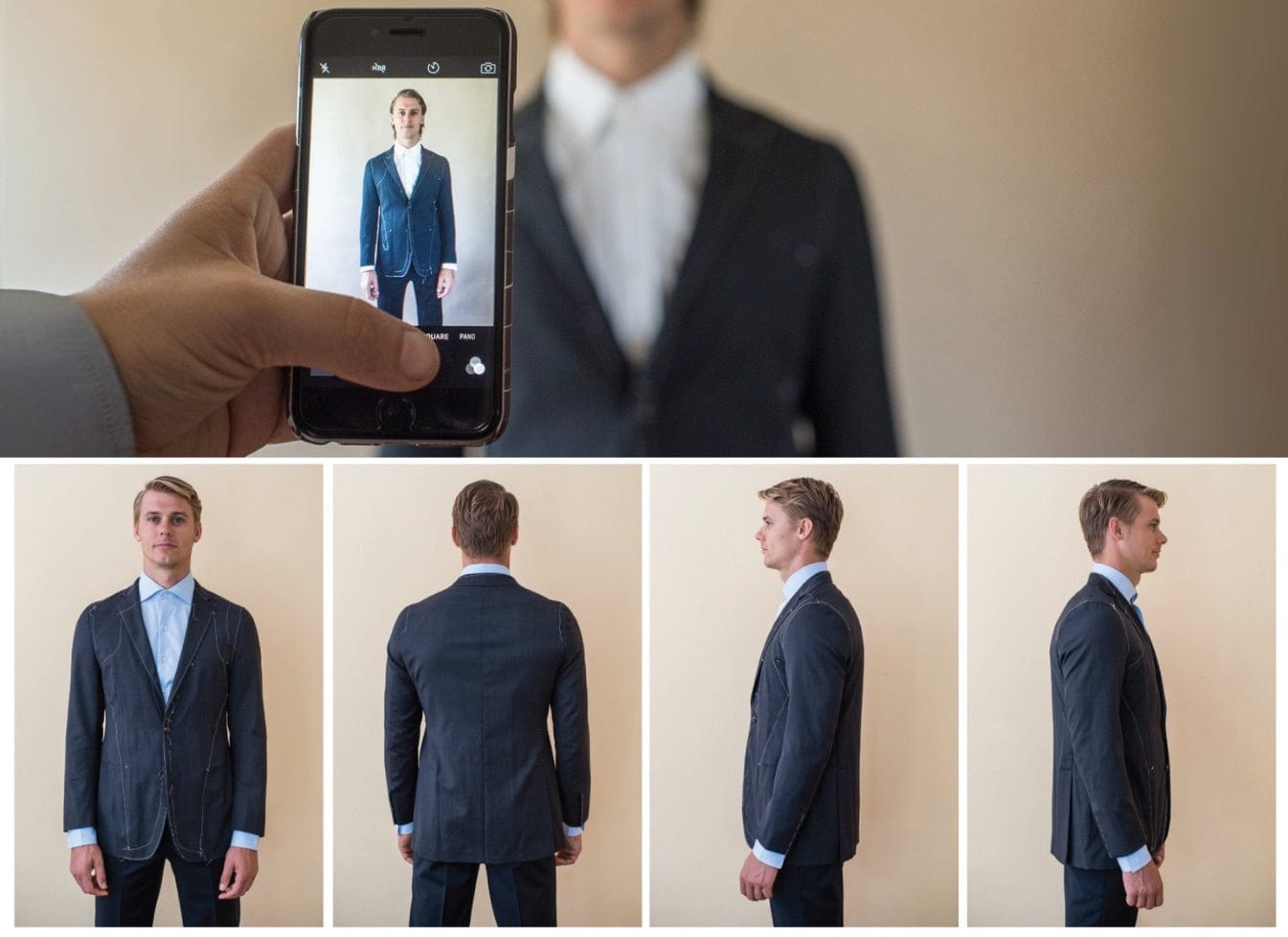
The other issue was fit. Our client was in his 50s, a dad, and carried more weight through his midsection. Off-the-rack clothing meant spending time in local stores and accepting compromises.
Before choosing the capsule, we worked through his fitting process. A coordinated wardrobe doesn’t solve much if you don’t enjoy wearing it. The jacket, trousers and shirts need to work with your proportions and feel comfortable when you sit, move and travel.
That’s why fit comes first. Once it’s established, we can build the wardrobe around the person who will actually wear it.
3. Choose a Suit You Can Split Up
The navy performance hopsack suit is the foundation. We chose a fabric that works as a sport coat as well as a suit, so the jacket doesn’t have to stay attached to its matching trousers.
For a presentation, wear the suit with a white or blue shirt and a tie. For a less formal meeting, leave off the tie. For another outfit, wear the jacket with stretch cotton trousers and a polo.
Hopsack also makes sense on the road because of its resilience. In the video, I describe rolling up my own hopsack jacket on a flight, then shaking it out and putting it back on at the destination. That’s the kind of practicality I want from a travel fabric.

4. Build in Shirts and Knitwear That Change the Dress Code
Two classic shirts, white and blue, give the capsule a straightforward starting point. The Action Stretch fabric in the video is non-iron and has stretch, making these practical options for a busy itinerary.
Then we added an oatmeal long-sleeve polo and a grey Hamilton crewneck. They give him a way to dress down without packing an entirely separate casual wardrobe.
Wear the polo with the suit when the occasion allows a more relaxed look, or with the cotton trousers on its own. Use the crewneck with trousers for downtime, then add a jacket when you want more structure.


5. Add Another Jacket and a Weather Layer
A second jacket changes the feel of the same shirts and trousers. Here, we used a glenplaid Comfort Stretch Travel Jacket, described in the video as a knitted tropical wool with natural stretch.
It works with the suit trousers or the stretch cotton trousers, giving him another way to move between meetings and casual plans.
For changing weather, there’s a packable charcoal raincoat. It can go over the suit, the jacket-and-trouser combinations or the more relaxed outfits. One useful outer layer is easier to work with than a separate coat for every look.

6. Keep Accessories Useful and Easy to Coordinate
A classic tie and white pocket square give him a more polished option when he needs it. A cashmere scarf and merino beanie add warmth without introducing another set of colors to coordinate.
We finished with a suede duffel and matching travel kit. The accessories support the wardrobe rather than complicating it.
The same principle applies to packing: start with the trip, then bring the pieces that serve it. A carry-on is the goal for this client, not a promise that every item in the full capsule belongs in one bag.


7. Turn the Same Pieces Into Different Outfits
Here’s how I’d use the capsule across a trip:
For a presentation: navy hopsack suit, white or blue shirt, and the tie.
For a less formal meeting: the same suit and shirt, worn open at the collar.
For a business-casual lunch: navy hopsack jacket, stretch cotton trousers and the long-sleeve polo.
For another day of meetings: glenplaid travel jacket, suit trousers and either dress shirt.
For casual plans: stretch cotton trousers with the polo or crewneck, adding the raincoat and scarf when the weather calls for them.
These are a few combinations, not a packing checklist for every destination. The value is being able to change the level of formality without starting over with a new outfit.
8. A Smaller Bag Starts With a Better Plan
A business travel capsule wardrobe isn’t about owning as little as possible. It’s about knowing why each piece is there.
For this client, that meant clothes that fit his body, fabrics chosen for travel, and combinations that cover the different parts of his trip. Less time second-guessing a suitcase. More ways to get dressed with what’s already in it.
Explore the Frequent Flyer Capsule to see the pieces and how they work together.
Want a Travel Wardrobe Built Around Your Schedule?
Bring your usual itinerary to a free wardrobe consultation. We’ll talk through your meetings, your travel habits, what you already own and where your current wardrobe falls short.
Then we can build a capsule around your body and the way you actually travel.